The 1936 copyright infringement lawsuit initiated by Edward W. Roman was especially significant because “Blue Moon” became one of the most successful songs of the era.
It is also fascinating to see a young songwriter with no financial means stand up to the most powerful corporations in the world that were protected by the most formidable legal teams imaginable and say, “Hey, that’s my song!” and have the case settled so quickly for a sum—$1,500—that would be a small fortune in Troy, New York, in 1936 during the Great Depression.
What follows is a graphic summary of how the principals and key stakeholders in the case are related to the case and to each other.
David
A young man with a song. . .
Edward W. Roman, the son of Polish immigrants, and an aspiring poet, trumpet player, and songwriter living in an upstate New York factory city during the Great Depression, submits a song he had written as a 17-year-old to a Tin Pan Alley song publisher who offers to broker it. . .
Fast forward. . .Time goes by, then suddenly Roman finds out that his song has been published without his consent and has been playing on the radio.
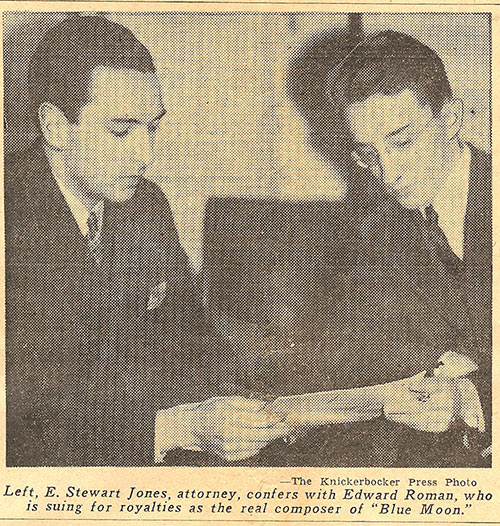
Fast Forward. . .Finally convinced by friends and family to take legal action to assert his rights, he meets with a prominent Troy attorney, E. Stewart Jones, who agrees to take the case.
Attorney for Edward W. Roman E. Stewart Jones
Bio Summary: E. Stewart Jones was a graduate of Albany Law and son of Abbott H. Jones, who founded the namesake law firm in 1898. He later became widely recognized as one of the leading attorneys in upstate New York.
MGM wasn’t just a studio; it was a legal force and used its industry power, vast resources, and legal muscle as a key weapon to maintain control and profitability during Hollywood’s Golden Age.
The caliber of legal talent involved in this case is remarkable—and telling—for a lawsuit brought by a 22-year-old, the son of Polish immigrants in upstate New York.
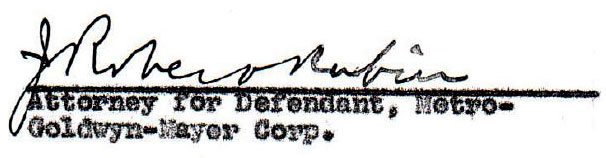
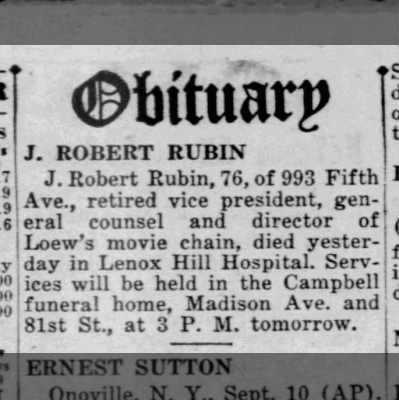
Attorney for Metro-Goldwyn-Mayer J. ROBERT RUBIN
Bio Summary: Not just another lawyer, Rubin was involved in the founding of MGM and became the richest person in New York City and the fifth wealthiest person in the country and an influential player in the highest levels of society.
(Double Click On Images Linked Above To Enlarge & Control)
Robbins Music
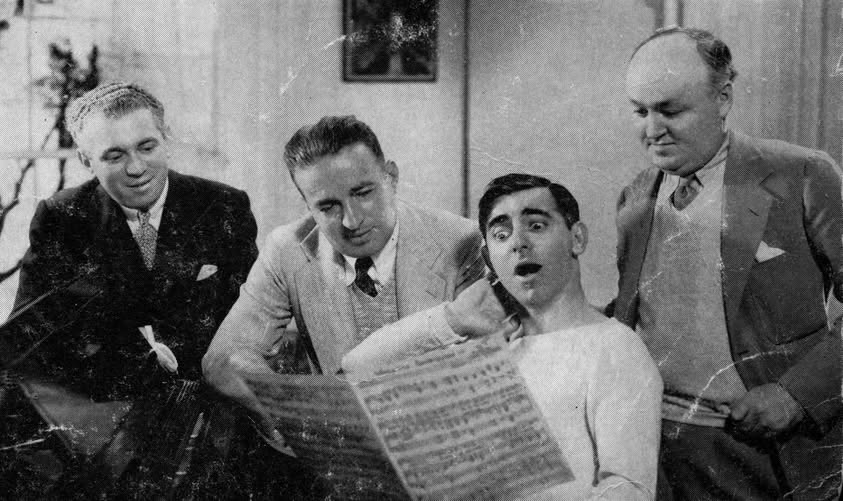
Left to right: Jack Robbins, Gus Kahn, Eddie Cantor, Walter Donaldson working on motion picture version of Whoopee!, 1930
Owned by MGM, Robbins Music Corp. was a major force in music publishing, also wielding significant power, often using complex legal tactics to control infringement disputes.
Its founder, Jack Robbins, recognized the commercial appeal of “Blue Moon” and vowed to “plug it from one end of the country to the other.”
Bio Summary: More than a powerful attorney, Abeles was an extremely influential player in the music industry.
For instance:
Abeles was a powerful voice on shaping copyright law reforms of the era.
He was a member of the panel established by the Library of Congress to revise the Copyright Act.
Abeles was also a trustee of the Copyright Society of the United States.
As Chairman of National Association of Orchestra Leaders, he spoke of cleaning up the “decadence” of jazz, saying, “You can defile a girl’s soul with a saxophone,” and saying, “Jazz will be spicy but not salacious.”
Jack Mahoney was the Tin Pan Alley song publisher who agreed to broker Roman’s song.
Described as the writer of “clean song hits,” he won fame in New York as the writer of “When You Wore a Tulip” and more than 100 other songs.
At the height of his popularity, Mahoney worked in the same building, 1658 Broadway, as MGM music publisher Jack Robbins.
An interesting side note: Mahoney was a first cousin to William (“Wild Bill”) J. Donovan, a Buffalo native and founder of the OSS, the predecessor entity to the Central Intelligence Agency (CIA).
Attorney for Jack Mahoney JACOB M. WEINSTEIN (no picture available)
Bio Summary: Jacob M. Weinstein practiced law for 70 years, more than 60 of them at MGM.
Virtually no information about Weinstein is available on the web, and not a single image could be found anywhere.
Weinstein’s role as an MGM career employee and attorney for Mahoney suggests a tie between the studio and the song publisher—and possibly songwriters Rodgers & Hart, who were MGM hired hands in the early 1930s when “Blue Moon” originated.
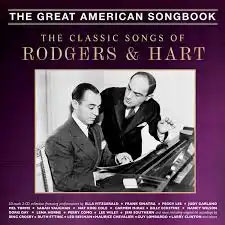
Richard Rodgers and Lorenz Hart were an American songwriting partnership who worked together on more than 500 songs between 1919 and 1943, including “Blue Moon.”
All but one of the songs had been written for a play or a film. The exception: “Blue Moon.”
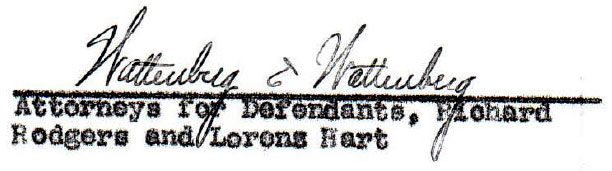
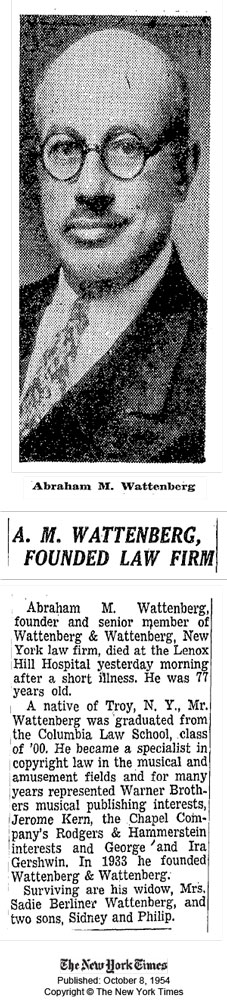
Attorney for Rodgers & Hart Wattenberg & Wattenberg
Abraham M. Wattenberg
Bio Summary: Abraham Mordecai (A.M.) Wattenberg used only the initials of his given names throughout his career.
As an intriguing twist, he was a native of Troy, New York, and grew up in the same neighborhood and during the same era as the father of E. Stewart Jones.
He had moved with his family to New York by the 1890s and graduated from Columbia Law in 1900.
The firm’s other Wattenberg, A.M.’s son, Sidney W., a graduate of Brooklyn Law, was a contemporary of Roman’s attorney, E. Stewart Jones.
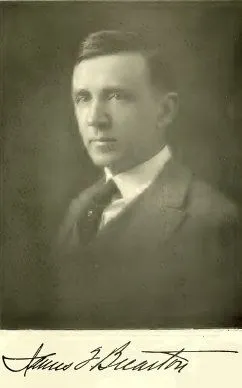
James F. Brearton, who presided in Ed Roman’s “Blue Moon” case, was a New York State judge who served as County Judge in Troy, New York, during the early 20th century. He was born in Troy in 1874 and graduated from Albany Law School in 1896. He was admitted to the bar the same year and began practicing law in Troy, eventually becoming a prominent figure in local legal and civic circles.